Roofing in Denton
A village of a few hundred with a lot of country around it, where the wind has had a long uninterrupted run before it reaches your roof.
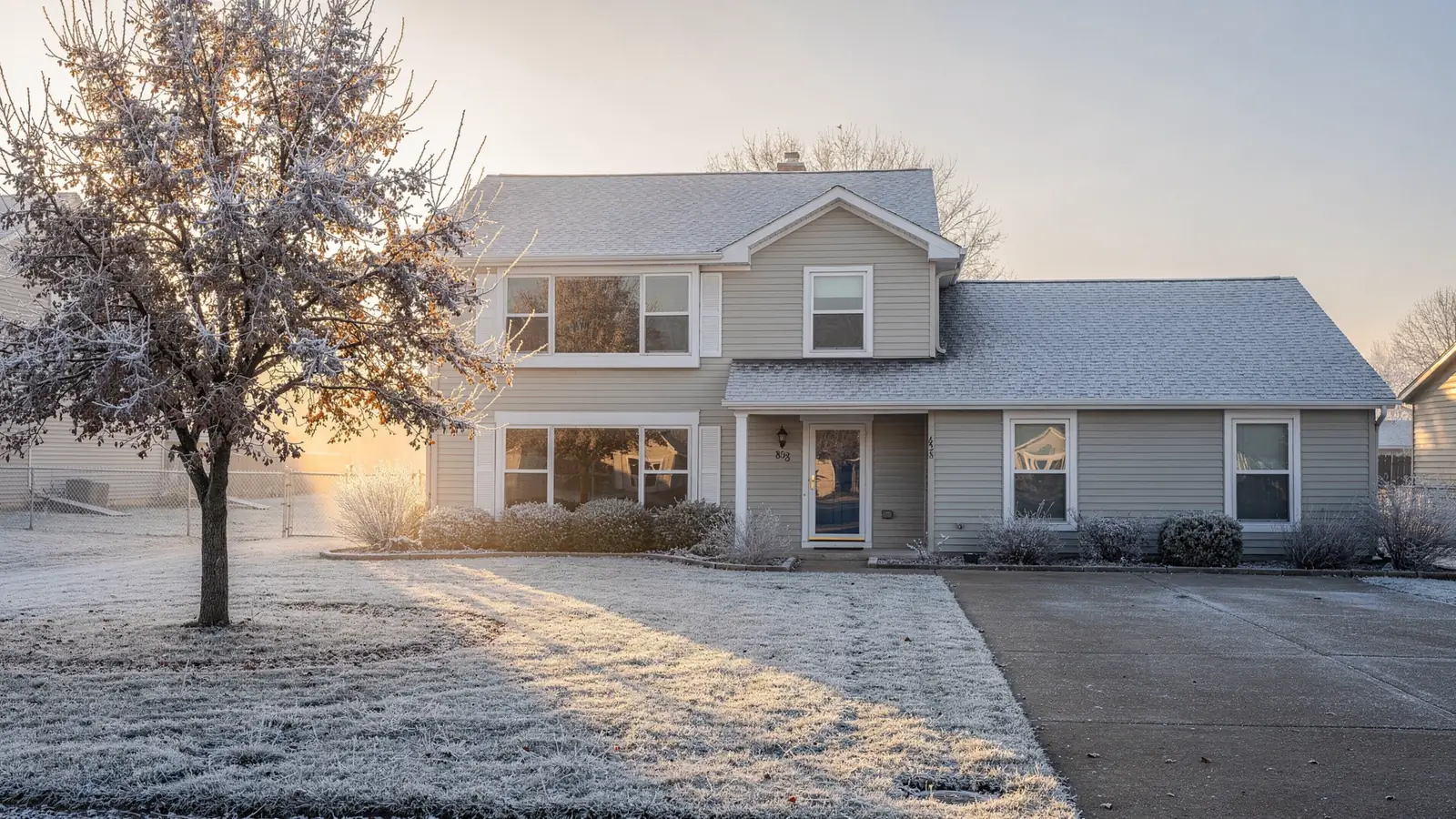
Wind with a long run at it
Denton sits out past the western edge of the city with farmland and open water around it, and that geography is the whole story for roofs here. Wind arrives having crossed ground with nothing much to break it up, so it reaches the house at close to full strength rather than having been slowed and confused by a dense street of other buildings.
What that does to a roof is specific and worth recognising. The heaviest suction on any roof plane sits around its outside edge, strongest at the corners. Somewhere sheltered, that concentration is blunted. Out here it is not, so the failures happen at the boundary: a straight run of missing or lifted shingles along a rake or an eave, sometimes only on the one face that took the gust, with the rest of the roof looking perfect from the road.
Homeowners dismiss that because it does not look like damage. It is the most reliable signature of wind uplift there is, and it is worth photographing on the day.
When a roof goes on here, the questions to ask are all about the perimeter. Is there a proper starter course and is it the right way round. What is the fastening pattern at the edges. What does the drip edge detail look like. A roof that is correct in the field and casual at the boundary will fail at the boundary.
More than one roof on the property
Most places out this way have a shop, a shed, a pole barn or a cover as well as a house, and those are almost always exposed fastener metal panel rather than shingle. Anybody up looking at the house should be asked to look at those too, because they are usually the ones quietly failing.
Panel roofs do not wear out the way shingles do. The panel itself can last decades. What gives out is the rubber washer under the head of every screw, which hardens in the sun, shrinks, stops bedding flat, and from then on every fixing is a way in. The building starts taking water in dozens of places while looking entirely sound from the yard.
The remedy is a rescrew: slightly larger screws so the new fastener bites clean metal, new washers right across the roof rather than only where the stains are. It is routine maintenance that almost nobody schedules, and it costs a fraction of a new roof.
On the long unbroken runs of panel you find on a barn, the edges and the gable trims are again where lifting starts, usually at an end lap that was fastened lightly. Same principle as the house, exaggerated by the size.
Two kinds of house
The old village core has smaller, simpler roofs, some with a long history of patching and occasionally boards rather than sheets underneath. The acreage builds around it are newer, larger and more complicated in shape, and when those give trouble it is almost always about how they went on rather than how old they are.
That distinction decides what a sensible quote looks like, and the list of what actually moves the price is on the cost page.
Saying the right things on the call
Mention that it is an acreage. Say whether there is a gate, how the drive behaves after rain, and how many buildings are involved. All of it affects scheduling and price, and all of it is better on the table at the start than discovered by a loaded truck.
If a storm is what prompted the call, the metal buildings are often where the evidence is plainest, because a dent in bare panel is not arguable in the way a mark on a weathered shingle is. What else to record is worth ten minutes before anybody arrives.
Questions people ask
- Why does wind damage here run along the edges instead of scattered about?
- Because uplift is not evenly spread across a roof plane. Suction concentrates at the perimeter and hardest at the corners, and a site with nothing upwind sharpens that further. So a roof out here tends to lose a band along one rake or one eave while the middle is untouched. It looks nothing like what people expect damage to look like, and it is the commonest reason somebody decides their roof is fine when it is not.
- Is it worth having a Lincoln company come out for one repair?
- Usually, but expect the travel to be in the number and expect fewer of them to bid on a small job in the fortnight after a storm. Putting several jobs into one visit, the boot on the house and the trim on the shed, gets better attention and a better price.
Last checked 2026-09-28.